
Last reviewed: November 2026. Sweetener status for Red Bull, Red Bull Sugarfree, Monster, Celsius, Bang, Ghost, Alani Nu, and the Starbucks bottled Frappuccino is from the U.S. labels we photographed in October 2026. Zevia Energy, GURU, yerba mate, Red Bull Zero, Reign, C4, Rockstar, and 5-hour Energy are from the manufacturers’ and retailers’ current published ingredient lists. Formulas change, so check the can.
Sucralose is the default sweetener of the energy aisle. It’s in nearly every zero-sugar can, and it’s in at least one can that isn’t zero-sugar at all. So people who want to avoid it, whether because of the gut-bacteria research, the aftertaste, or a general wish to skip artificial sweeteners, end up reading a lot of labels to find very few drinks. This page does the reading. One thing to know before the sucralose free energy drinks list: an energy drink without sucralose is sweetened with something else, and that something is almost always sugar or stevia. Which of those two you’re comfortable with decides which can you want.
Quick answer: which energy drinks have no sucralose?
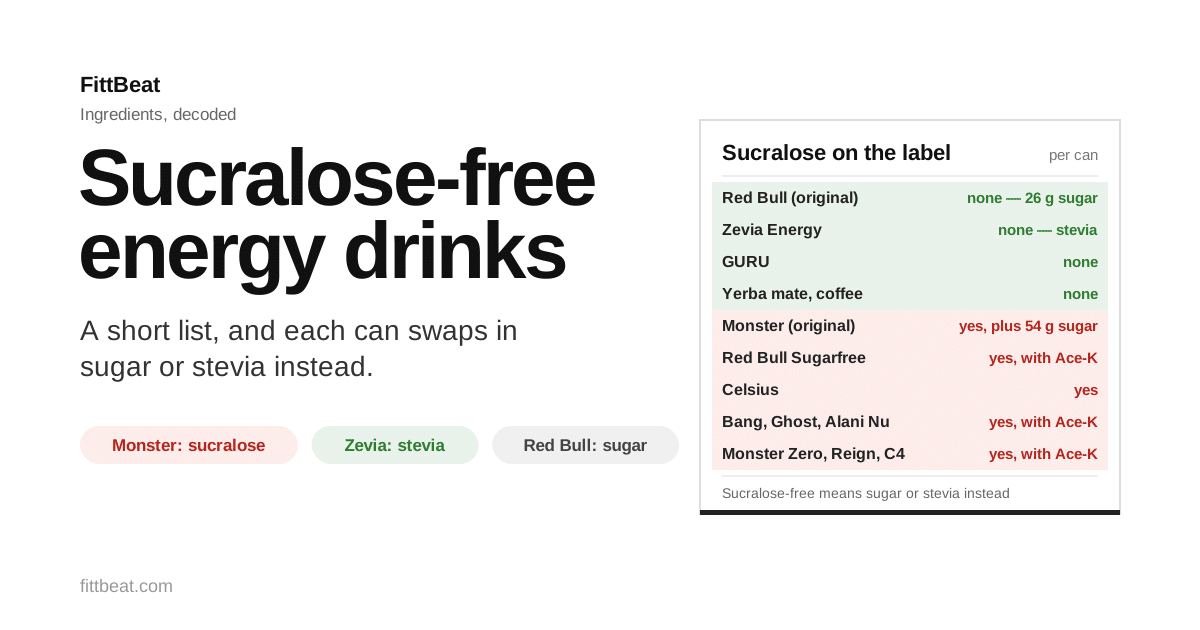
Sucralose-free: Red Bull original (26 g of sugar, 80 mg caffeine), Zevia Energy (stevia, 120 mg), GURU (cane sugar, stevia, or erythritol depending on the line), canned yerba mate, coffee and cold brew, and the Starbucks bottled Frappuccino (46 g of sugar). Contains sucralose: Monster in every version including the sugared original, Celsius, Bang, Ghost, Alani Nu, Reign, C4, 5-hour Energy, Rockstar Sugar Free, Red Bull Zero, and the current U.S. Red Bull Sugarfree. The catch: the mainstream sucralose-free cans get there by using sugar. If you want no sucralose and no sugar, the choice narrows to stevia-sweetened cans like Zevia Energy and GURU Lite, or to coffee and unsweetened tea.
Jump to: The list · Label table · Which cans have it · Two surprises · Why avoid it? · What replaces it · Verdict · FAQ
Sucralose Free Energy Drinks
Red Bull (original) Sugar instead: 26 g
The can we photographed is sweetened with sucrose and glucose and nothing else. That makes Red Bull the only one of the big energy brands whose flagship can has no artificial sweetener. The trade is 26 g of sugar in 8.4 oz, about six and a half teaspoons and roughly half the FDA’s daily value for added sugar. The caffeine is 80 mg, the lowest of the major cans. Note that this applies to the original only. Both of Red Bull’s sugar-free cans contain sucralose.
Zevia Energy Stevia, 0 g sugar
The one widely sold energy drink with no sugar and no artificial sweetener. Zevia Energy is carbonated water, stevia leaf extract, caffeine, fruit acids, and natural flavors, with 120 mg of caffeine in 12 oz and no color or preservative. Stevia has its own aftertaste, and some people dislike it more than sucralose. On the label, though, this is the cleanest answer to the question this page asks.
GURU No sucralose in any line
A Canadian organic brand with growing U.S. distribution. By its published lists, GURU Original is sweetened with organic cane sugar, GURU Lite with stevia and monk fruit, and GURU Zero with erythritol. Caffeine comes from green tea and guarana, at about 140 mg per 12 oz can. We haven’t photographed one yet, so treat these as the manufacturer’s figures.
Canned yerba mate Cane sugar, or none
Brewed yerba mate in a can, from Guayakí (now sold as Yerba Madre) and similar brands. The sweetened flavors use organic cane sugar, 20 to 30 g in a tall can, with 80 to 150 mg of naturally occurring caffeine. The unsweetened versions have neither sugar nor sweetener. There’s no sucralose in either.
Coffee, cold brew, and the bottled Frappuccino No sweetener unless added
Black coffee and unsweetened cold brew are the simplest sucralose-free caffeine there is: about 140 mg in a 12 oz drip coffee and 150 to 200 mg in a 16 oz cold brew. Bottled coffee drinks vary. The Starbucks bottled Frappuccino we photographed has five ingredients and no artificial sweetener, and it also has 46 g of sugar. “Light” and “zero sugar” bottled coffees often do use sucralose, so read those.
Sucralose on the label: the table
| Drink | Sucralose | Sweetened with | Sugar | Caffeine |
|---|---|---|---|---|
| Red Bull (8.4 oz) | No | Sugar, glucose | 26 g | 80 mg |
| Zevia Energy (12 oz) | No | Stevia | 0 g | 120 mg |
| GURU Lite (12 oz) | No | Stevia, monk fruit | Low | ~140 mg |
| Yerba mate, sweetened (15.5 oz) | No | Cane sugar | 20 to 30 g | 80 to 150 mg |
| Coffee (12 oz drip) | No | Nothing | 0 g | ~140 mg |
| Bottled Frappuccino (13.7 oz) | No | Sugar | 46 g | ~105 mg |
| Monster original (16 oz) | Yes | Sugar, glucose, sucralose | 54 g | 160 mg |
| Red Bull Sugarfree (8.4 oz) | Yes | Sucralose, Ace-K | 0 g | 80 mg |
| Celsius (12 oz) | Yes | Sucralose | 0 g | 200 mg |
| Bang (16 oz) | Yes | Sucralose, Ace-K | 0 g | 300 mg |
| Ghost (16 oz) | Yes | Sucralose, Ace-K | 0 g | 200 mg |
| Alani Nu (12 oz) | Yes | Sucralose, Ace-K | 0 g | 200 mg |
Three things to notice. In the top half, only the stevia cans and plain coffee are green in both the sucralose and sugar columns. Every zero-sugar can in the bottom half uses sucralose, and all but Celsius pair it with acesulfame potassium. And Monster original is the one row that is red in both columns: it has the sugar and the sucralose.
Which energy drinks have sucralose?
Most of them. From the labels we’ve photographed: Monster (original, Zero Sugar, and the Ultra line), Celsius, Bang, Ghost, Alani Nu, and Red Bull Sugarfree. From published lists: Reign, C4, 5-hour Energy, Rockstar Sugar Free and Pure Zero, and Red Bull Zero. If a can says “zero sugar” and doesn’t say “stevia” on the front, assume sucralose until the ingredient list says otherwise.
Two cans people assume are sucralose-free
Monster original. A drink with 54 g of sugar shouldn’t need a sweetener, and the green can has one anyway. Sucralose sits fifteenth on the label we photographed, added to push sweetness past what the sugar delivers. Anyone who picked the “regular” Monster to avoid artificial sweeteners didn’t avoid them.
Red Bull Sugarfree. For years this can was sweetened with aspartame and acesulfame potassium, and many lists online still say so. The U.S. can we photographed in October 2026 lists sucralose and acesulfame potassium, with no aspartame. Red Bull Zero, the other sugar-free can, lists sucralose as well. So within Red Bull, only the original is sucralose-free.
Why avoid sucralose? (And should you?)
Here are the reasons people give, with what the evidence says about each.
“It affects gut bacteria and blood sugar.” This is the best-supported concern. A 2022 randomized trial in Cell gave healthy adults sucralose at doses below the acceptable daily intake for two weeks. Their gut bacteria shifted and their glucose tolerance got measurably worse, with a response that varied a lot from person to person. It was a short study, and nobody has shown what the effect means over years.
“It damages DNA.” A 2023 lab study found that sucralose-6-acetate, a compound present in trace amounts in sucralose and formed in the gut, damaged DNA in cultured human cells. That’s a signal worth following up. It was found in a dish, and it hasn’t been shown in people at drink-level exposure.
“The WHO says not to use it.” In 2023 the WHO advised against using non-sugar sweeteners as a way to control weight, because the long-term evidence didn’t show a benefit. That’s guidance about whether sweeteners help. It isn’t a finding that sucralose is unsafe, and the FDA and EFSA acceptable daily intakes are unchanged.
“I don’t like the taste.” That’s reason enough, and it’s the one where stevia may not help.
Taken together, there’s a real reason to limit sucralose and no clear reason to fear a can of it. Our sucralose breakdown covers the research in full.
Read next: Sucralose — the gut-bacteria and appetite research since 2022, and where regulators stand.
What the sucralose-free cans use instead
Sugar. Red Bull, sweetened yerba mate, GURU Original, and the bottled Frappuccino. This is the trade to think hardest about. The evidence against daily sugared drinks (weight gain, type 2 diabetes, fatty liver) is decades deep and far stronger than anything on sucralose. An 8.4 oz Red Bull at 26 g is a moderate dose. A sweetened yerba mate or a Frappuccino is a soda’s worth or more.
Stevia and monk fruit. Zevia Energy and GURU Lite. Both are plant-derived, with no calories and no known glucose effect. They have a shorter research record than sucralose, and nothing in it so far points to a problem at drink amounts. The cost is taste.
Erythritol. GURU Zero, and some other “natural” zero cans. It’s a sugar alcohol with almost no calories. A 2023 study linked high blood levels of erythritol to clotting and cardiovascular events. That research is early and debated, but it’s worth knowing if you’re choosing erythritol specifically to be cautious.
Nothing. Coffee, cold brew, and unsweetened mate or tea. The only version of this list with no trade at all.
One thing the sucralose-free cans mostly don’t change is the rest of the blend. Red Bull still has taurine and B vitamins, and every can here still has caffeine, which is the ingredient that does the work and carries the most immediate risks.
Sucralose-free energy drinks: the verdict
FittBeat verdict
A short list that splits in two: sugar instead, or stevia instead. If you want to avoid sucralose and keep sugar at zero, Zevia Energy is the mainstream answer and GURU Lite is the alternative, with coffee ahead of both. If sugar doesn’t bother you in small amounts, an 8.4 oz Red Bull is the only big-brand can without an artificial sweetener, and it’s also the lowest caffeine dose on the shelf. What doesn’t make sense is switching from a zero-sugar Celsius to a 54 g Monster to get away from sucralose, because the Monster has it too. Check the sweetener line, then check the sugar line right after it.
The concerns in a sucralose-free can, ranked by evidence:
- Sugar. 26 g in Red Bull, 20 to 30 g in sweetened mate, 46 g in a Frappuccino. This is the best-documented long-term harm on this page.
- Caffeine dose. 80 to 200 mg depending on the drink. Palpitations, anxiety, and poor sleep track total daily caffeine, not the sweetener.
- Erythritol. In some zero-sugar “natural” cans. The cardiovascular signal is early and unconfirmed.
- Stevia and monk fruit. No evidence of harm at these amounts, with a shorter track record.
Sucralose-free energy drinks for kids, pregnancy, and diabetes
Kids and teens: the sweetener isn’t why the American Academy of Pediatrics says children shouldn’t have energy drinks. Caffeine is. A sucralose-free can is still not for them.
Pregnancy: guidance is under 200 mg of caffeine a day. Red Bull (80 mg) and Zevia Energy (120 mg) fit within that, and Celsius-strength cans use the whole allowance. Sucralose itself is considered safe in pregnancy by the FDA at normal intake, so caffeine and sugar are the numbers to watch.
Diabetes: this is where the trade matters most. A sugared Red Bull raises blood glucose directly. Sucralose doesn’t in most people, though the 2022 trial found it worsened glucose tolerance in some. Stevia-sweetened cans or unsweetened coffee avoid both questions. It’s worth a conversation with whoever manages your care.
Cleaner alternatives
For caffeine with no sweetener of any kind: black coffee, cold brew, or unsweetened yerba mate. For a canned energy drink with the shortest label: Zevia Energy. For the smallest dose: a shot of espresso at about 65 mg, or green tea at 30 to 50. And if sucralose turns out not to bother you, our energy drinks comparison ranks the zero-sugar cans on everything else.
Frequently asked questions
Which energy drinks don’t have sucralose?
Red Bull original, Zevia Energy, GURU, canned yerba mate, and coffee or cold brew. Among zero-sugar cans, Zevia Energy (stevia) and GURU Lite (stevia and monk fruit) are the main options without it.
Does Monster have sucralose?
Yes, in every version. Monster Zero Sugar and the Ultra line use sucralose with acesulfame potassium, and the sugared original lists sucralose on top of its 54 g of sugar.
Does Red Bull have sucralose?
The original doesn’t. It’s sweetened with sugar and glucose only. Red Bull Sugarfree and Red Bull Zero both list sucralose.
Does Red Bull Sugarfree have aspartame or sucralose?
The current U.S. can lists sucralose and acesulfame potassium, with no aspartame. Older cans used aspartame and Ace-K, which is why many websites still say so.
Does Celsius have sucralose?
Yes. Sucralose is the only sweetener in the standard Celsius can. Celsius has sold a stevia-sweetened line as well, so check the front of the can.
Is sucralose bad for you?
Regulators consider it safe within the acceptable daily intake. A 2022 trial found it changed gut bacteria and worsened glucose tolerance in some healthy adults, and a 2023 lab study raised a DNA-damage question about a related compound. That’s a reason to limit it, with no proven harm from an occasional can.
What’s the healthiest energy drink without sucralose?
Plain coffee or unsweetened yerba mate, which have no sweetener at all. Among cans, Zevia Energy has 120 mg of caffeine, stevia, and no sugar, color, or preservative.
Is stevia better than sucralose?
There’s less research on stevia, and none of it so far shows the gut or glucose effects seen with sucralose. It’s a reasonable swap if you want to avoid sucralose. Neither is as well studied as the harm from daily sugar.
Sources
- Labels photographed October 2026: Red Bull (8.4 oz), Red Bull Sugarfree (8.4 oz), Monster Energy (12 oz), Celsius (12 oz), Bang (16 oz), Ghost (16 oz), Alani Nu (12 oz), Starbucks Frappuccino (13.7 oz). Zevia Energy, GURU, yerba mate, Red Bull Zero, Reign, C4, Rockstar, and 5-hour Energy ingredient lists from the manufacturers’ and retailers’ current published labels, checked November 2026.
- Suez J, et al. Personalized microbiome-driven effects of non-nutritive sweeteners on human glucose tolerance. Cell, 2022. doi:10.1016/j.cell.2022.07.016
- Schiffman SS, et al. Toxicological and pharmacokinetic properties of sucralose-6-acetate and its parent sucralose: in vitro screening assays. Journal of Toxicology and Environmental Health, Part B, 2023. doi:10.1080/10937404.2023.2213903
- World Health Organization. Use of non-sugar sweeteners: WHO guideline. 2023. who.int
- U.S. FDA. Aspartame and other sweeteners in food. fda.gov
- Witkowski M, et al. The artificial sweetener erythritol and cardiovascular event risk. Nature Medicine, 2023. doi:10.1038/s41591-023-02223-9
- Malik VS, et al. Sugar-sweetened beverages and risk of metabolic syndrome and type 2 diabetes. Diabetes Care, 2010. doi:10.2337/dc10-1079
- Schneider MB, Benjamin HJ, AAP Committee on Nutrition. Sports drinks and energy drinks for children and adolescents: are they appropriate? Pediatrics, 2011. doi:10.1542/peds.2011-0965
Sweetener status for drinks we haven’t photographed is from published ingredient lists and may change. A product on this page without a FittBeat link hasn’t been through our full label review yet.
This article is for informational purposes and is not medical advice. Talk to a doctor or registered dietitian about your individual nutrition needs.
