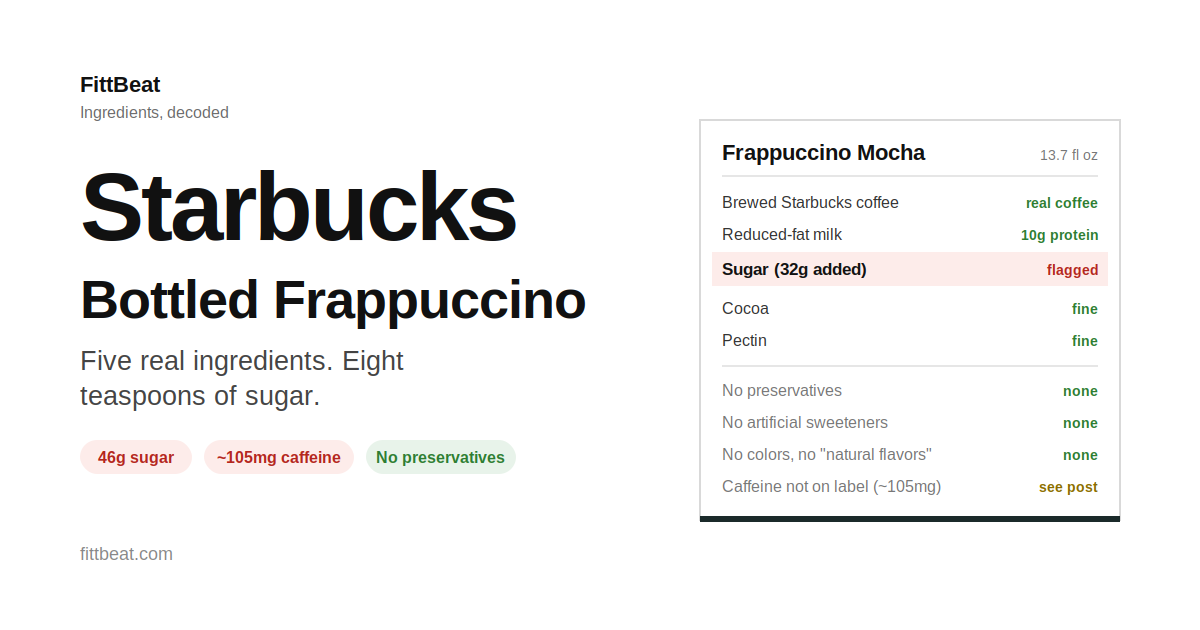

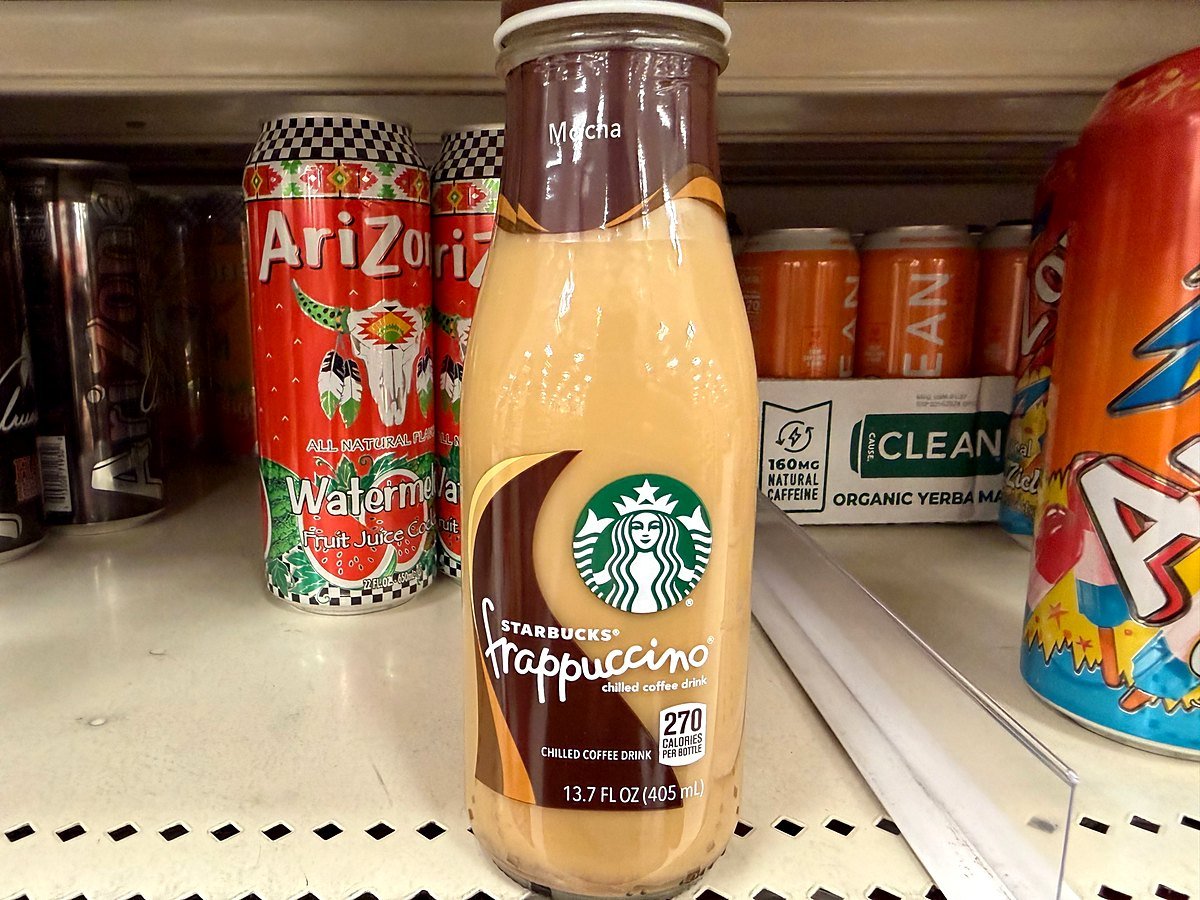
Last reviewed: October 2026. Reflects the U.S. Starbucks Frappuccino Chilled Coffee Drink, Mocha, 13.7 fl oz glass bottle (©2023 label), photographed in store. Coffee, Vanilla, and Caramel bottles differ slightly and are noted below; this is the bottled grocery product, not the blended café drink.
The Starbucks bottled Frappuccino is the rare thing on a convenience-store cooler shelf with an ingredient list you can read in one breath: brewed coffee, reduced-fat milk, sugar, cocoa, pectin. No preservatives, no artificial sweeteners, no colors, no “natural flavors” hiding anything, no proprietary blend. It’s also 270 calories and 46 grams of sugar in a 13.7-ounce bottle — more sugar than a can of Coke — and the label leaves out the one number most people want, which is the caffeine. Here’s all the Starbucks Frappuccino ingredients, where the sugar actually comes from, the caffeine by flavor, and how the bottle compares to the energy drinks it sits next to.
Quick answer: what’s in a bottled Frappuccino?
Five ingredients: brewed Starbucks coffee (water and coffee), reduced-fat milk, sugar, cocoa, and pectin. The Mocha bottle has 270 calories, 4.5 g of fat, 140 mg of sodium, 46 g of sugar (32 g added, the rest from the milk), 10 g of protein, and 25% of a day’s calcium. Caffeine isn’t printed on the bottle; PepsiCo, which makes it, lists about 105 mg for Mocha, 110 mg for Coffee, 90 mg for Caramel, and 60 mg for Vanilla. There is nothing to flag on this label except the sugar, and the sugar is a lot: 32 g added is 64% of the daily limit, and the 46 g total is what you’d get from a 12 oz Coke plus two sugar packets. It’s a coffee milkshake, honestly labeled.
Jump to: The label · Each ingredient · Where the 46 g comes from · Caffeine by flavor · Nutrition · Frappuccino vs. Monster · Verdict · FAQ
The full Starbucks Frappuccino ingredients list
Brewed Starbucks® Coffee (Water, Coffee), Reduced-Fat Milk, Sugar, Cocoa, Pectin. Contains: milk.
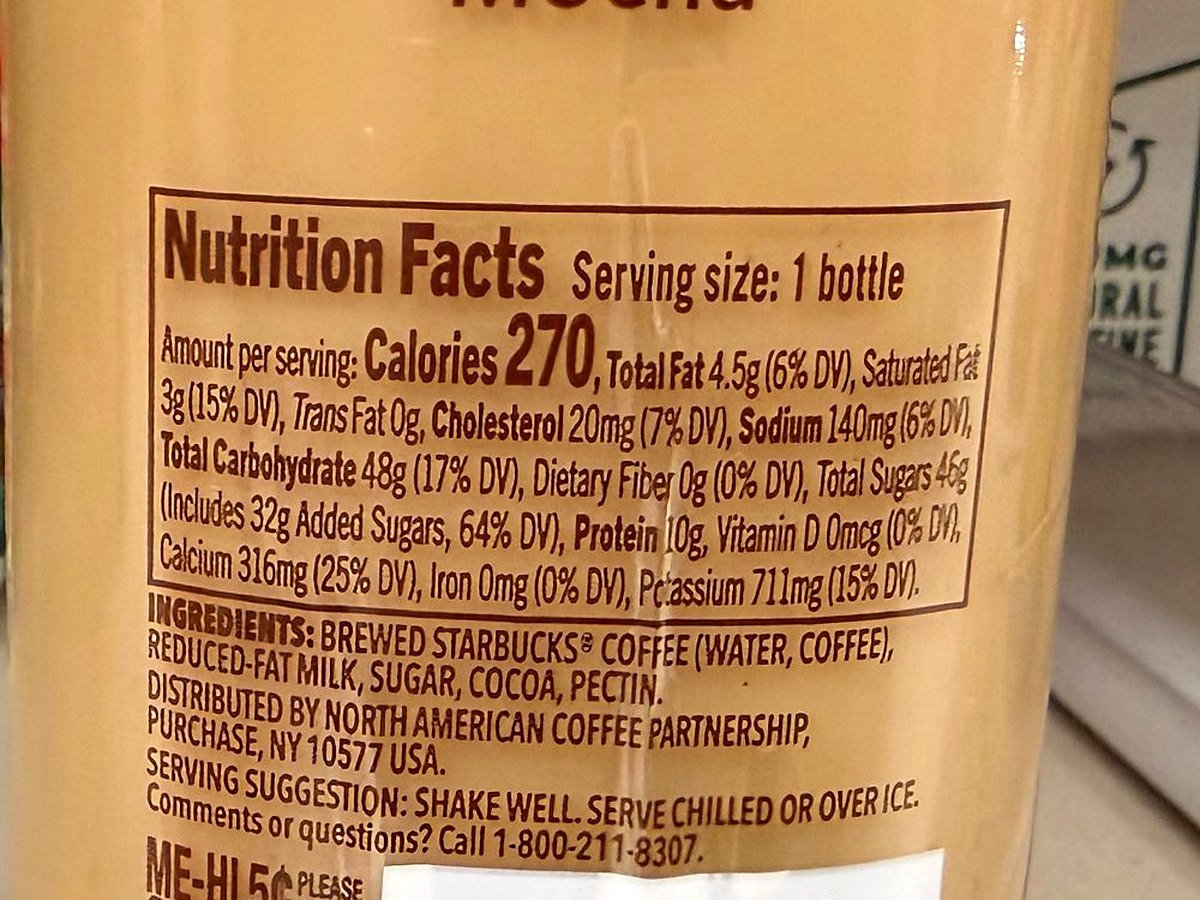
Three things to notice. Coffee is the first ingredient — this is coffee with milk and sugar in it, not sugar water with coffee flavor, which is what most bottled “coffee drinks” in the same cooler are. Milk is second and sugar is third, and because milk carries its own sugar, the two together make the 46 g. And there is no preservative at all: the bottle is shelf-stable because it’s heat-treated and sealed in glass, the same way canned milk is, which is why it says “refrigerate after opening” and nothing about sorbate or benzoate. That is unusual enough in this aisle to be the point of the post.
Bottled Frappuccino ingredients explained
Brewed Starbucks coffee Real coffee
Water and coffee, listed as a sub-ingredient the way a brewed beverage should be. Starbucks uses Arabica beans; the brew is diluted by the milk and sugar, which is why the caffeine per ounce (about 8 mg) is lower than a cup of coffee (12 mg) but higher than any soda. This is also where the “coffee” flavor and the bottle’s mild acidity come from.
Reduced-fat milk Real dairy
2% milk, the second ingredient by weight. It’s where the 10 g of protein, 316 mg of calcium, 711 mg of potassium, and 3 g of saturated fat come from — and about 14 g of the sugar, as lactose. A bottle contains roughly a cup and a quarter of milk. If you’d happily drink a glass of 2% with your coffee, this is that, with the sugar added.
Sugar Flagged, 32 g added
Plain sucrose, 32 g per bottle — eight teaspoons, 64% of the daily added-sugar limit. Not high-fructose corn syrup, not an artificial sweetener; the label is better than the number. The number is still the whole problem with this drink: 32 g of added sugar is more than the American Heart Association’s daily ceiling for women (25 g) and most of the ceiling for men (36 g), delivered in a bottle people treat as a morning coffee rather than a dessert. The section below breaks down where all 46 g come from.
Cocoa Fine
Cocoa powder, for the mocha. It adds a little caffeine and theobromine of its own, which is why Mocha has more caffeine than Vanilla despite the same coffee base, and it’s the only thing separating this bottle from the Coffee flavor. No chocolate syrup, no added fat.
Pectin Fine
A fiber from citrus peel or apple, used here as a stabilizer so the cocoa and milk don’t separate in the bottle. It’s the same ingredient that sets jam. The only additive on the list, and a benign one — it’s why the label says “shake well” instead of listing carrageenan or gellan gum, which most bottled coffee drinks use for the same job.
What’s not here Worth saying
No sodium benzoate or potassium sorbate. No sucralose or acesulfame potassium — compare the Monster next to it, which has sucralose in its full-sugar can. No caramel color, no dyes, no “natural flavors,” no maltodextrin, no carrageenan, no vitamin spray, no energy blend. The absence of all of that is the honest credit this bottle earns, and it’s rare.
Where the 46 g of sugar comes from
The nutrition panel says 46 g of total sugar and 32 g of added sugar, and the gap matters. The 14 g that isn’t added is lactose from the milk — the sugar in a cup and a quarter of 2%, which comes with protein, calcium, and fat that slow its absorption. Nobody counts the sugar in a glass of milk against their added-sugar limit, and the FDA doesn’t either. The 32 g is sucrose, stirred in, and that’s the number to judge the bottle on.
Judged on 32 g, it’s a sweet drink in the same range as a 12 oz Coke (39 g, all added) or a 12 oz Monster (41 g). Judged on 46 g, which is what the front-of-mind “sugar in a Frappuccino” number usually is, it looks worse than both, and the comparison is slightly unfair because a third of it is milk. The fairest framing: this is a 12-ounce soda’s worth of added sugar plus a glass of milk, in one bottle. That’s a dessert or a treat, and a poor daily habit, for the same reason a daily soda is.
How much caffeine is in a bottled Frappuccino?
The bottle doesn’t say, because the FDA doesn’t require caffeine to be listed on foods where it occurs naturally, and coffee is a natural source. PepsiCo’s product database, which publishes the figures the label omits, gives these per 13.7 oz bottle:
| Bottled Frappuccino flavor (13.7 oz) | Caffeine | Compared to |
|---|---|---|
| Coffee | 110 mg | About a 10 oz cup of coffee |
| Mocha | 105 mg | A bit more than a Red Bull (80 mg) |
| Caramel | 90 mg | An 8 oz cup of coffee |
| Vanilla | 60 mg | Two cans of Coke (34 mg each) |
| Oatmilk flavors | ~55 mg | Half a cup of coffee |
The 9.5 oz bottles scale down proportionally (Mocha about 70 mg). None of these is a high dose; Mocha and Coffee are a solid morning coffee’s worth, Vanilla is mild. The practical note is that two bottles in a day, which the 12-pack encourages, is 210 mg and 64 g of added sugar — a pattern that looks like an energy-drink habit from the inside even though the label looks nothing like one. Figures published on third-party sites run from 60 to 130 mg for the same bottles; the PepsiCo numbers are the ones to trust.
Bottled Frappuccino nutrition facts
| Per container | Bottled Frappuccino, Mocha (13.7 oz) | Café Mocha Frappuccino, grande with whip (16 oz) | Monster Original (12 oz) | Coca-Cola (12 oz) | Coffee with 2% milk and 2 tsp sugar (12 oz) |
|---|---|---|---|---|---|
| Calories | 270 | 370 | 170 | 140 | ~70 |
| Total sugar | 46 g | 51 g | 41 g | 39 g | ~11 g |
| Added sugar | 32 g | ~45 g | 41 g | 39 g | 8 g |
| Caffeine | ~105 mg | ~100 mg | 120 mg | 34 mg | ~140 mg |
| Protein | 10 g | 5 g | 0 g | 0 g | ~3 g |
| Calcium | 25% DV | 15% DV | 0% | 0% | ~8% DV |
| Ingredients | 5 | ~15 (syrup, whip, base) | 24 | 7 | 3 |
| Preservatives | None | None | Sorbic + benzoic acid | Phosphoric acid | None |
| Artificial sweetener | None | None | Sucralose | None | None |
Frappuccino, Monster, and Coke figures are from current labels; the café drink is from Starbucks’ published nutrition for a grande Mocha Frappuccino with whipped cream and the homemade column is an estimate. The bottle is less sugary and lower-calorie than the café version it’s named after, and it carries more protein than anything else in the table. It is still more total sugar than a Coke.
Bottled Frappuccino vs. Monster
They sit on the same shelf and get bought for the same reason, so the comparison is fair. A 12 oz Monster has 41 g of sugar, all added, 120 mg of caffeine, two preservatives, sucralose, and an energy blend; the Frappuccino has 32 g added, 105 mg of caffeine, five ingredients, and 10 g of protein with a quarter of a day’s calcium. On ingredients it isn’t close — the Frappuccino is a cleaner product by every measure FittBeat uses. On sugar they’re in the same range, and the Frappuccino has 100 more calories because of the milk. If the choice is one or the other, the Frappuccino is the better bottle. If the choice is either or a cup of coffee, the coffee wins by a mile on both.
Is a bottled Frappuccino bad for you?
FittBeat verdict
The cleanest label in the cooler, with a dessert’s worth of sugar in it. Five real ingredients, nothing artificial, no preservatives, and real protein and calcium from real milk — this bottle earns every credit a label can earn. Then it adds eight teaspoons of sugar. One is a fine treat, and a better treat than almost anything next to it. As a daily morning coffee, it’s 32 g of added sugar before breakfast, five days a week, which is the same habit as a daily soda with better PR. Buy it when you’d buy a milkshake, not when you’d buy a coffee.
The concerns, ranked by evidence:
- Added sugar. 32 g a bottle, 64% of the daily value; the only real issue, and a big one if it’s daily.
- Calories. 270 for a drink people don’t count as food.
- Caffeine not on the label. ~105 mg is a reasonable dose, but it’s invisible on the bottle and the 12-pack makes two a day easy.
- Saturated fat. 3 g, from the milk; 15% of the daily value, not a concern on its own.
- Everything else. Coffee, milk, cocoa, pectin: nothing to flag.
Bottled Frappuccino for kids, keto, and allergies
Kids and teens: it reads like a milk drink and that’s how kids treat it, but 105 mg of caffeine is a full adult coffee and 32 g of added sugar is more than the AHA’s 25 g daily limit for children. Not a kids’ drink; the caffeine is the reason more than the sugar.
Keto: no. 48 g of carbohydrate. There is no sugar-free bottled Frappuccino; the “Lite” line was discontinued.
Allergies: contains milk. Lactose-intolerant readers should note the 14 g of lactose; the oatmilk and almondmilk bottles exist for that reason and have their own labels. No soy, nuts, or gluten in the Mocha. Kosher certified.
Cleaner alternatives
For the same thing with less sugar: a bottled cold brew with milk (Starbucks’ own, Stok, or Califia) runs 10–20 g of sugar with a similar short list, or buy the unsweetened cold brew and add your own milk and one teaspoon. For the chocolate: a glass of 2% with a spoon of cocoa and a shot of espresso is the same five ingredients at a quarter of the added sugar. For a grab-and-go bottle with no sugar at all: any black cold brew, which has more caffeine than the Frappuccino and nothing else. And if what you actually want is the Frappuccino, the 9.5 oz bottle is the same drink with 22 g of added sugar — the easiest cut there is.
Frequently asked questions
How much sugar is in a bottled Starbucks Frappuccino?
The 13.7 oz Mocha has 46 g of total sugar, of which 32 g is added sugar and about 14 g is lactose from the milk. The 9.5 oz bottle has about 22 g added.
How much caffeine is in a bottled Frappuccino?
It isn’t on the label. PepsiCo lists 110 mg for Coffee, 105 mg for Mocha, 90 mg for Caramel, and 60 mg for Vanilla per 13.7 oz bottle — roughly a cup of coffee for the first two.
What are the ingredients in a bottled Frappuccino?
Brewed Starbucks coffee (water, coffee), reduced-fat milk, sugar, cocoa, and pectin. That’s the whole Mocha list. Vanilla and Caramel swap cocoa for natural flavor.
Does the bottled Frappuccino have preservatives?
No. It’s heat-treated and sealed in glass, which keeps it shelf-stable without sodium benzoate or potassium sorbate. Refrigerate after opening.
Is a bottled Frappuccino healthier than a Monster?
On ingredients, clearly — five real ones versus 24, with protein and calcium and no artificial sweetener or preservatives. On sugar, they’re similar: 32 g added versus 41 g in a 12 oz Monster. On calories the Frappuccino is higher because of the milk.
Is the bottled Frappuccino the same as the café Frappuccino?
No. The café drink is a blended ice beverage with syrup, a Frappuccino base, and whipped cream; a grande Mocha runs 370 calories and 51 g of sugar. The bottle is a chilled coffee-and-milk drink with 270 calories and 46 g. Same name, different product.
Is there a sugar-free bottled Frappuccino?
No. The reduced-sugar “Lite” bottles were discontinued. The lowest-sugar option in the line is the 9.5 oz bottle; for no sugar, choose a black cold brew.
Can kids drink bottled Frappuccino?
It’s not a good idea as a habit: 105 mg of caffeine is an adult coffee’s worth, and 32 g of added sugar exceeds the AHA’s daily limit for children. An occasional shared bottle is a different question.
Sources
- North American Coffee Partnership (PepsiCo / Starbucks). Nutrition facts and ingredients, Starbucks Frappuccino Chilled Coffee Drink, Mocha, 13.7 fl oz, ©2023 label. Product label, photographed October 2026.
- PepsiCo. PepsiCo Product Facts — Starbucks Frappuccino bottled flavors, caffeine per bottle. pepsicoproductfacts.com
- U.S. FDA. Added sugars on the Nutrition Facts label. fda.gov
- Vos MB, et al. Added sugars and cardiovascular disease risk in children: a scientific statement from the American Heart Association. Circulation, 2017. doi:10.1161/CIR.0000000000000439
- Malik VS, et al. Sugar-sweetened beverages and risk of metabolic syndrome and type 2 diabetes. Diabetes Care, 2010. doi:10.2337/dc10-1079
- U.S. FDA. Spilling the beans: how much caffeine is too much? fda.gov
- Starbucks. Mocha Frappuccino Blended Beverage, grande, nutrition information. starbucks.com
Caffeine figures are PepsiCo’s published values, not label values; the label does not list caffeine. The homemade-coffee column in the nutrition table is an estimate.
This article is for informational purposes and is not medical advice. Talk to a doctor or registered dietitian about your individual nutrition needs.
