

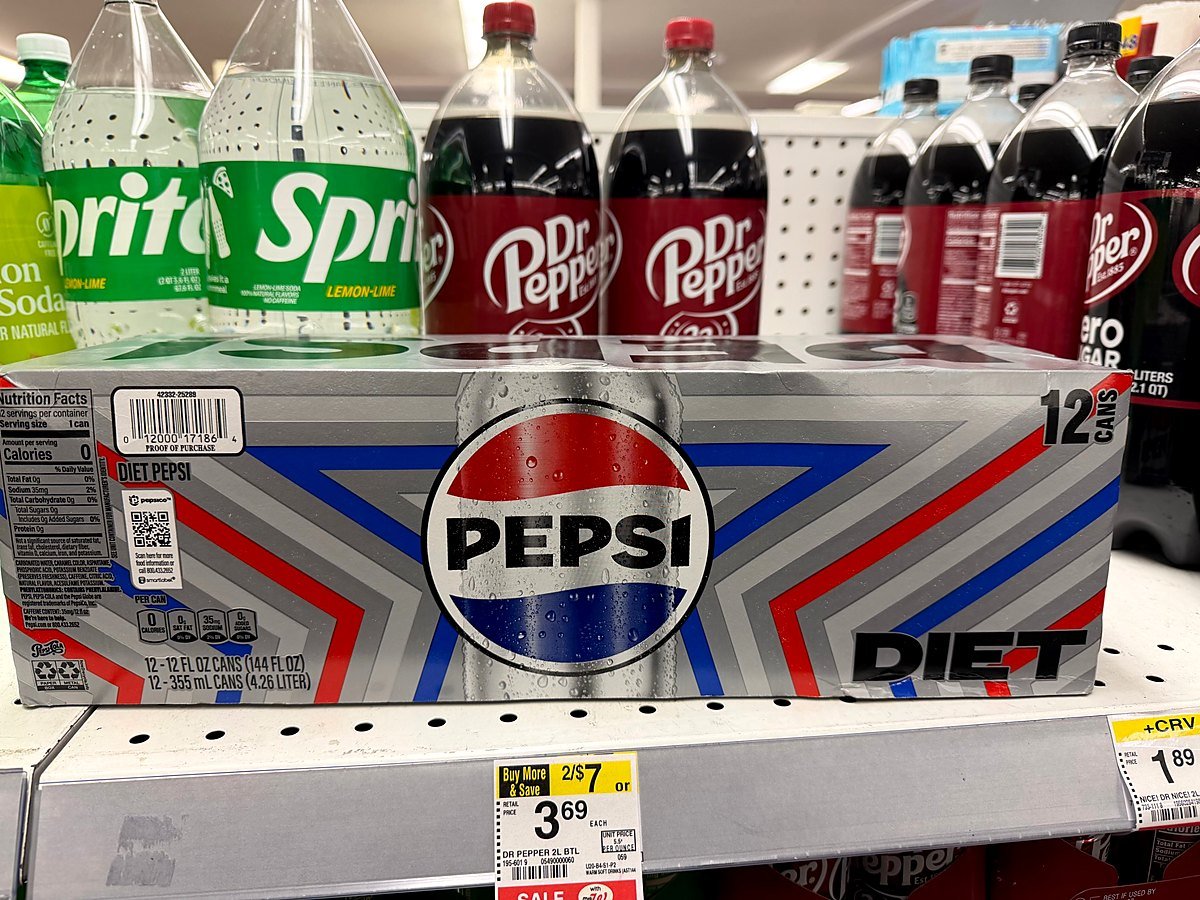
Last reviewed: October 2026. Reflects the U.S. Diet Pepsi label on the 12 × 12 fl oz pack photographed for this post. Pepsi and Pepsi Zero Sugar are compared below and have their own breakdowns.
Diet Pepsi is the case study in what happens when a soda company takes the most-feared ingredient out of its product. In 2015, PepsiCo removed aspartame from Diet Pepsi in the U.S. because customers said it was their top concern, and replaced it with sucralose. Sales fell. A year later the company brought an aspartame version back alongside it, and in 2018 it switched the main Diet Pepsi back to aspartame for good. The can on shelves today is aspartame and acesulfame potassium, with phosphoric acid, caramel color, a preservative, and 35 mg of caffeine. Here’s all the Diet Pepsi ingredients, what each one does, and how it compares to the other diet colas.
Quick answer: what’s in Diet Pepsi?
Diet Pepsi is carbonated water, caramel color, aspartame, phosphoric acid, potassium benzoate (preserves freshness), caffeine, citric acid, natural flavor, and acesulfame potassium. A 12 oz can has 0 calories, 0 g of sugar, 35 mg of sodium, and 35 mg of caffeine — less than Diet Coke’s 46 mg and about the same as regular Pepsi. It contains phenylalanine and carries the PKU warning. The sweeteners are approved and within safe limits at soda doses. Phosphoric acid is the ingredient with the most research behind it, for teeth and, at heavy intake, bones. Compared with regular Pepsi, it removes 41 g of sugar; compared with Pepsi Zero Sugar, it’s a close cousin with the same two sweeteners and a different flavor profile.
Jump to: Full label · Each ingredient · The aspartame reversal · Nutrition facts · Diet Pepsi vs. Pepsi Zero vs. Diet Coke · Verdict · FAQ
The full Diet Pepsi ingredients list
Carbonated Water, Caramel Color, Aspartame, Phosphoric Acid, Potassium Benzoate (Preserves Freshness), Caffeine, Citric Acid, Natural Flavor, Acesulfame Potassium. Phenylketonurics: contains phenylalanine. Caffeine content: 35 mg/12 fl oz. PepsiCo, Inc.

Three things to notice. Aspartame is the third ingredient, ahead of the phosphoric acid, while Ace-K is last — aspartame does almost all the sweetening and Ace-K smooths the finish. The can has two acids, phosphoric for the cola bite and citric for brightness. And PepsiCo prints the caffeine amount right on the box, 35 mg per can, which not every soda maker does.
Diet Pepsi ingredients explained
Carbonated water Fine
Filtered water with dissolved CO₂. Almost the entire can.
Caramel color Low concern
Why cola is brown. Colas use Class IV caramel color, made with ammonia and sulfite compounds, which can produce a byproduct called 4-MEI. After California listed 4-MEI under Proposition 65 in 2011, Coca-Cola and PepsiCo changed their caramel color processes to cut it. It isn’t a synthetic dye and isn’t part of the dye phase-out. Our caramel color breakdown covers the four classes and the 4-MEI question.
Aspartame Flagged
The main sweetener, about 200 times sweeter than sugar. In 2023 the WHO’s cancer agency classified it as “possibly carcinogenic to humans” (Group 2B) on limited evidence, while the WHO’s food-additive committee reviewed the same data and kept the acceptable daily intake at 40 mg per kg of body weight — many cans a day for an adult. The FDA’s limit is higher. It breaks down into phenylalanine, which people with phenylketonuria can’t process, hence the warning. Our aspartame breakdown has the full context.
Phosphoric acid Flagged
The cola bite, and the ingredient with the most concrete research on this label. It makes cola among the most acidic drinks you can buy, which softens enamel with frequent sipping. In large observational studies, women who drank cola daily — regular or diet — had lower hip bone density than those who didn’t, an association not seen with other sodas; the leading explanation is phosphoric acid’s effect on calcium balance. The effect is tied to heavy, daily intake. Our phosphoric acid breakdown covers teeth, bones, and kidneys.
Potassium benzoate Low concern
The preservative, needed because there’s no sugar to help inhibit microbes. Diet Pepsi has no added vitamin C, so the benzene reaction that benzoates are known for has no main trigger here. Our sodium benzoate breakdown explains the chemistry.
Caffeine 35 mg
About a third of a cup of coffee, less than Diet Coke (46 mg) or Dr Pepper Zero Sugar (41 mg), and a little less than Pepsi Zero Sugar (38 mg). For a healthy adult it’s a modest dose; it adds up if Diet Pepsi is an all-day drink, and it’s worth counting for kids and in pregnancy. A caffeine-free Diet Pepsi exists.
Citric acid Fine
Adds brightness alongside the phosphoric acid. Harmless, though it adds to the overall acidity.
Natural flavor Undisclosed
The cola flavor — traditionally citrus oils, vanilla, and spice notes. Details aren’t disclosed.
Acesulfame potassium (Ace-K) Flagged
The second sweetener, used in a small amount to mask aspartame’s aftertaste. It passes through the body unchanged and is approved by the FDA and EFSA; the criticism centers on thin early testing and newer animal research, none of which has changed its regulatory status. Our acesulfame potassium breakdown covers it.
The aspartame that left and came back
In April 2015, PepsiCo announced it would drop aspartame from Diet Pepsi in the U.S., with an executive saying removing it was customers’ number-one concern. Starting that August, Diet Pepsi, Caffeine Free Diet Pepsi, and Wild Cherry Diet Pepsi were sweetened with sucralose and Ace-K instead, in cans marked “aspartame free.” Sales kept falling — Beverage Digest data showed Diet Pepsi volume down about 11% at retail in early 2016 — and many longtime drinkers simply didn’t like the taste. In September 2016, PepsiCo brought back an aspartame version as “Diet Pepsi Classic Sweetener Blend,” sold alongside the sucralose one. In early 2018 it went further and switched the main Diet Pepsi back to aspartame.
The episode is a useful reminder of two things. People’s fear of aspartame was strong enough to make one of the biggest beverage companies reformulate a flagship product. And when it did, the replacement — sucralose — is a sweetener with its own open research questions, not a cleaner one. Swapping one well-studied sweetener for another didn’t make Diet Pepsi healthier; it made it taste different.
Diet Pepsi nutrition facts
| Per 12 oz can | Diet Pepsi | Pepsi | Pepsi Zero Sugar | Diet Coke | Coke Zero Sugar |
|---|---|---|---|---|---|
| Calories | 0 | 150 | 0 | 0 | 0 |
| Sugar | 0 g | 41 g | 0 g | 0 g | 0 g |
| Sweetener | Aspartame + Ace-K | HFCS + sugar | Aspartame + Ace-K | Aspartame | Aspartame + Ace-K |
| Caffeine | 35 mg | 38 mg | 38 mg | 46 mg | 34 mg |
| Phosphoric acid | Yes | Yes | Yes | Yes | Yes |
| Caramel color | Yes | Yes | Yes | Yes | Yes |
| Preservative | Potassium benzoate | None | Potassium benzoate | Potassium benzoate | Potassium benzoate |
The diet colas are close to interchangeable on ingredients. The differences are which sweeteners (Diet Coke uses aspartame alone) and how much caffeine, where Diet Pepsi is at the low end. Pepsi, Pepsi Zero Sugar, Diet Coke, and Coke Zero figures are from our breakdowns of each.
Diet Pepsi vs. Pepsi Zero Sugar vs. Diet Coke
Diet Pepsi vs. Pepsi Zero Sugar: same company, same two sweeteners, same acids and preservative. Pepsi Zero Sugar is built to taste closer to regular Pepsi and has a few milligrams more caffeine (38 vs 35 mg). On health, they’re effectively the same drink; pick the one you like.
Diet Pepsi vs. Diet Coke: Diet Coke uses aspartame alone and has more caffeine (46 mg). Both have phosphoric acid and caramel color. If you’re limiting caffeine, Diet Pepsi is the lower dose. Our Diet Coke breakdown goes line by line.
Diet Pepsi vs. regular Pepsi: regular Pepsi has 41 g of sugar and 150 calories a can. For a regular soda drinker, the diet version is the better trade on the evidence.
Is Diet Pepsi bad for you?
FittBeat verdict
A standard diet cola with less caffeine than most — and phosphoric acid as the real reason not to make it an all-day drink. Diet Pepsi has no sugar and no dyes, two well-studied sweeteners at doses far below their safety limits, and 35 mg of caffeine. The ingredient with the clearest evidence is phosphoric acid: rough on teeth when sipped constantly and linked to lower bone density in heavy daily cola drinkers. As a swap for regular Pepsi, it’s a clear improvement. As a replacement for water, it isn’t. PepsiCo’s own aspartame experiment showed that taking the most-feared ingredient out didn’t make the drink healthier — just less popular.
The concerns, ranked by evidence:
- Phosphoric acid with heavy intake. Enamel erosion with frequent sipping; lower bone density in women drinking cola daily in observational studies.
- Aspartame for people with PKU. A real, specific hazard, flagged on the box.
- Caffeine, uncounted. 35 mg is modest, but it adds up across several cans and matters for kids and in pregnancy.
- The sweetener questions. Aspartame’s 2023 Group 2B classification and gut-bacteria research on sweeteners — limited evidence, no change to safe limits.
- Everything else. Caramel color (with reduced 4-MEI), potassium benzoate, citric acid, and natural flavor are low concern.
Diet Pepsi for kids, pregnancy, and diabetes
Kids: caffeine plus artificial sweeteners, and the American Academy of Pediatrics advises against routine artificially sweetened drinks for children. Not a kid’s drink.
Pregnancy: guidance is under 200 mg of caffeine a day; one can is 35 mg. Aspartame is considered safe in pregnancy at normal intakes unless the mother has PKU.
Diabetes and keto: 0 g of carbohydrate; it won’t raise blood sugar directly.
Cleaner alternatives
For a zero-calorie cola without caffeine, Caffeine Free Diet Pepsi. For a cola without artificial sweeteners or phosphoric acid, a stevia-sweetened cola or Olipop‘s colas, which skip caramel color too. For the fizz alone, sparkling water. And if you drink several diet colas a day, cutting the number of cans does more for teeth and bones than switching brands.
Frequently asked questions
What are the ingredients in Diet Pepsi?
Carbonated water, caramel color, aspartame, phosphoric acid, potassium benzoate, caffeine, citric acid, natural flavor, and acesulfame potassium.
Does Diet Pepsi have aspartame?
Yes. Diet Pepsi is sweetened with aspartame and acesulfame potassium. PepsiCo replaced aspartame with sucralose in 2015, then brought it back — first alongside the sucralose version in 2016, then as the main formula in 2018.
How much caffeine is in Diet Pepsi?
35 mg per 12 oz can, printed on the box. That’s less than Diet Coke (46 mg) and Pepsi Zero Sugar (38 mg). Caffeine Free Diet Pepsi has none.
Is Diet Pepsi bad for you?
It has no sugar and its sweeteners are within safe limits at soda doses. The main concern is phosphoric acid with heavy daily intake, which is linked to enamel erosion and lower bone density. It’s a better choice than regular Pepsi, not a substitute for water.
What’s the difference between Diet Pepsi and Pepsi Zero Sugar?
Both use aspartame and Ace-K. Pepsi Zero Sugar is formulated to taste closer to regular Pepsi and has slightly more caffeine (38 vs 35 mg). Nutritionally they’re nearly identical.
Is Diet Pepsi better than Diet Coke?
They’re very similar. Diet Pepsi has less caffeine (35 vs 46 mg) and adds Ace-K; Diet Coke uses aspartame alone. Both contain phosphoric acid and caramel color.
Does Diet Pepsi have sodium?
35 mg per can, 2% of the daily value.
Is Diet Pepsi safe during pregnancy?
In moderation, for most people. One can is 35 mg of caffeine, well under the 200 mg daily guideline, and aspartame is considered safe in pregnancy unless the mother has phenylketonuria.
Sources
- PepsiCo, Inc. Nutrition facts and ingredients, Diet Pepsi, 12 × 12 fl oz cans, photographed October 2026.
- Associated Press. Diet Pepsi dropping aspartame on customer concerns. April 24, 2015. abc7ny.com
- BeverageDaily. Diet Pepsi brings back aspartame with launch of Diet Pepsi Classic Sweetener Blend. June 28, 2016. beveragedaily.com
- ESM Magazine / Bloomberg. New Pepsi, old problem: U.S. soda sales have lost their fizz. 2016. esmmagazine.com
- WHO / IARC / JECFA. Aspartame hazard and risk assessment results released. July 14, 2023. who.int
- Tucker KL, et al. Colas, but not other carbonated beverages, are associated with low bone mineral density in older women: the Framingham Osteoporosis Study. American Journal of Clinical Nutrition, 2006. doi:10.1093/ajcn/84.4.936
- U.S. FDA. Spilling the beans: how much caffeine is too much? fda.gov
- Baker-Smith CM, et al. The use of nonnutritive sweeteners in children. Pediatrics, 2019. doi:10.1542/peds.2019-2765
The 2018 return of aspartame as Diet Pepsi’s main formula was reported by PepsiCo bottlers and trade press; the market-wide changeover took effect in February 2018.
This article is for informational purposes and is not medical advice. Talk to a doctor or registered dietitian about your individual nutrition needs.
