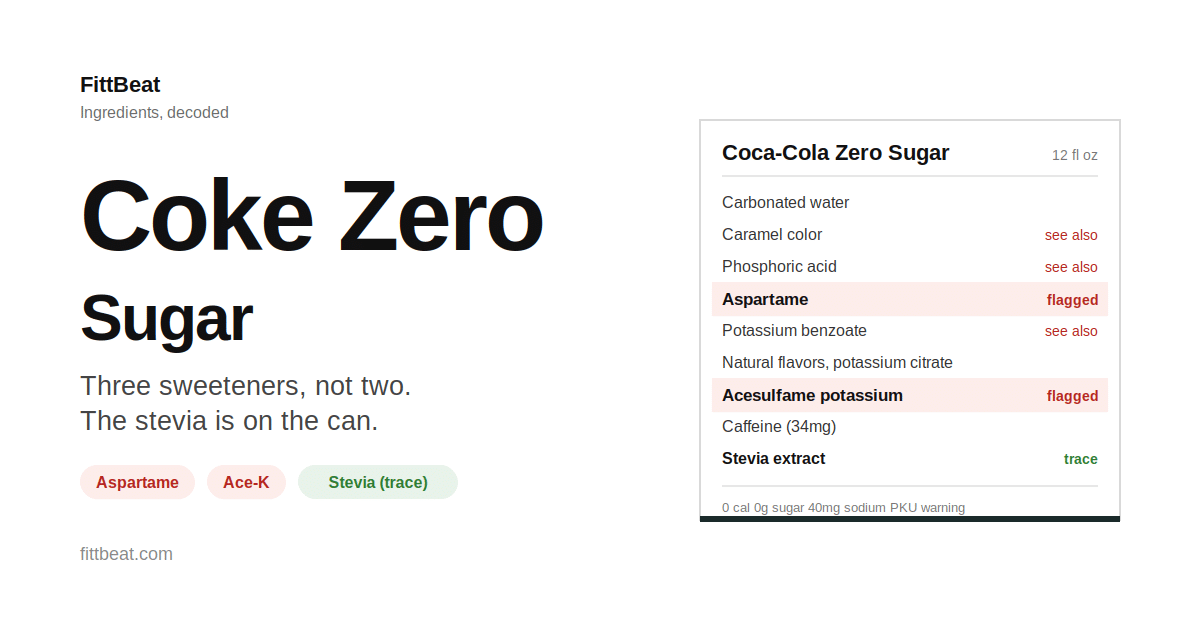

Last reviewed: October 2026. Reflects the current U.S. Coca-Cola Zero Sugar label, photographed in store (16 oz can, ©2023 formula; 12 oz figures are scaled from the same label). Coke Zero was reformulated in 2017 and 2021.
Coca-Cola Zero Sugar is the fastest-growing product Coca-Cola makes, and the drink that finally got people who hated Diet Coke to go sugar-free. The pitch is simple: tastes like Coke, zero sugar, zero calories. Almost every description of it — including, until this update, ours — says it’s sweetened with two artificial sweeteners. The can says three. Here’s all the Coke Zero ingredients as it’s printed today, what each one does, the stevia line most pages miss, and how it compares to Diet Coke and Pepsi Zero.
Quick answer: what’s in Coke Zero?
Coca-Cola Zero Sugar is carbonated water, caramel color, phosphoric acid, aspartame, potassium benzoate, natural flavors, potassium citrate, acesulfame potassium, caffeine, and stevia extract. A 12 oz can has 0 calories, 0 g sugar, about 40 mg sodium, and 34 mg of caffeine. The sweetening is done by aspartame and Ace-K; the stevia is listed last, a trace used to round the aftertaste, but it means Coke Zero is a three-sweetener cola, not two. It carries a PKU warning because of the aspartame. The caramel color has a Prop 65 history, the phosphoric acid is hard on teeth, and the benzoate is a non-issue without vitamin C. Compared with regular Coke’s 39 g of sugar, it’s the better trade. Compared with water, it isn’t.
Jump to: The label · Each ingredient · The stevia line · Nutrition · Coke Zero vs. Diet Coke vs. Pepsi Zero · Verdict · FAQ
The full Coke Zero ingredients list
Carbonated Water, Caramel Color, Phosphoric Acid, Aspartame, Potassium Benzoate (To Protect Taste), Natural Flavors, Potassium Citrate, Acesulfame Potassium, Caffeine, Stevia Extract. Phenylketonurics: contains phenylalanine. Caffeine content: 34 mg/12 fl oz (45 mg/16 fl oz).
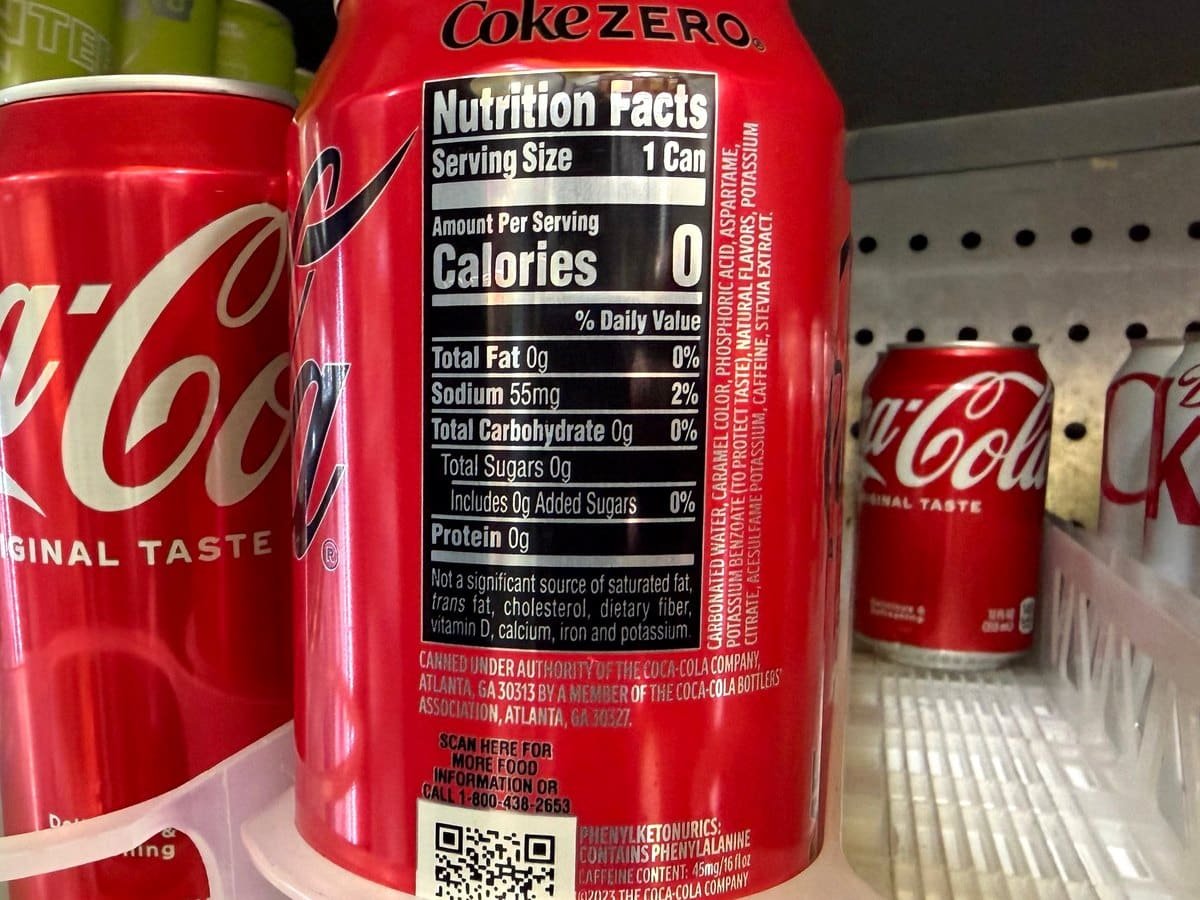
Three things to notice. Aspartame is fourth, ahead of the flavors, so it carries most of the sweetness; Ace-K comes well after, as the supporting sweetener. Stevia extract is the last ingredient — the smallest amount in the can — and it’s missing from nearly every published ingredient list for Coke Zero. And there’s no citric acid, which Diet Coke has; Coke Zero uses potassium citrate as a buffer instead, which is where its 60 mg of potassium comes from.
Coke Zero ingredients explained
Carbonated water Fine
Filtered water with dissolved carbon dioxide. The carbonation forms a little carbonic acid, which contributes to acidity but far less than the phosphoric acid does.
Caramel color Flagged, low concern
Second ingredient by weight, and the color. Cola caramel (Class IV) is made by heating sugars with ammonium and sulfite compounds, which produces a byproduct called 4-methylimidazole (4-MEI). 4-MEI caused cancer in mice at high doses and is listed under California’s Prop 65, which is why Coca-Cola reformulated in 2012 to keep levels below the warning threshold. Current amounts are low and the FDA considers them safe; it’s the ingredient with the most regulatory history on the label. Our caramel color breakdown has the full story.
Phosphoric acid Flagged, for teeth
The cola tang, and what lowers the pH to about 2.5–3. It’s the ingredient most strongly linked to tooth erosion, and observational studies have associated heavy cola intake with lower bone density. Dose-dependent: a can a day is a different story from a liter. Our phosphoric acid breakdown goes deeper.
Aspartame Flagged
The primary sweetener, about 200 times sweeter than sugar, breaking down in the body to phenylalanine, aspartic acid, and methanol. In 2023 the WHO’s cancer agency classified it “possibly carcinogenic” (Group 2B, the tier that includes aloe and pickled vegetables) on limited evidence, while the FDA and the WHO’s own food-safety committee kept it approved at current limits. A 12 oz Coke Zero has roughly 85–90 mg — about half of Diet Coke, since Ace-K shares the load — so reaching the FDA’s acceptable daily intake would take around 30 cans. The phenylketonurics line is a legal requirement; anyone with PKU avoids it entirely. Our aspartame breakdown covers the cancer question and the cardiovascular research.
Potassium benzoate (to protect taste) Low concern here
The preservative — the potassium version of sodium benzoate, used partly to keep sodium down. Benzoates can form trace benzene with vitamin C under heat or light; Coke Zero has no vitamin C, so that pathway doesn’t apply. Our sodium benzoate breakdown explains the chemistry.
Natural flavors Undisclosed
The cola profile — citrus oils, spices, vanilla-type notes — in Coca-Cola’s best-known trade secret. “Natural” means plant- or animal-derived; it doesn’t tell you what.
Potassium citrate Fine
A buffer that smooths the acid and rounds the sweetener aftertaste, and the source of the 60 mg of potassium on the panel. Harmless at this dose.
Acesulfame potassium (Ace-K) Flagged
The second sweetener, and the one that makes Coke Zero taste different from Diet Coke. About 200 times sweeter than sugar, unmetabolized, and almost always paired with another sweetener because it’s bitter alone. FDA-approved and widely used, but the least-studied of the major sweeteners; rodent studies have linked it to gut microbiome changes, and no human harm has been demonstrated. Our Ace-K breakdown covers what is and isn’t known.
Caffeine 34 mg — low
34 mg per 12 oz (45 per 16 oz), the same as regular Coke, less than Diet Coke’s 46, about a third of a cup of coffee. A caffeine-free version exists.
Stevia extract Trace, last on the list
A plant-derived sweetener (steviol glycosides from the stevia leaf), listed last, which means it’s the smallest ingredient in the can. Coca-Cola uses a small amount to smooth the aftertaste of the aspartame-and-Ace-K blend rather than as a sweetener in its own right — the same trick it uses in Coke Life’s successors abroad. Stevia has a clean regulatory record and no calories; the main thing it tells you is that Coke Zero is a three-sweetener cola, and that the “aspartame and Ace-K” description on most sites is missing a line.
The stevia line: why almost nobody lists it
Coca-Cola’s own product pages and most third-party databases list Coke Zero’s ingredients as ending at caffeine. The can in the photo above, a ©2023 label bought in October 2026, ends at stevia extract. The likeliest explanation is that stevia was added quietly as part of the 2021 flavor retune — the one Coca-Cola described as making Coke Zero “even more delicious” without saying how — and the published lists were never updated. It’s a trace, it doesn’t change the sweetener story in any way that matters for health, and it’s not a reason to switch. It’s just the kind of thing you only find by reading the can, which is the point of this site. If your can doesn’t list it, it’s an older label; send us a photo.
Coke Zero nutrition facts
| Per 12 oz can | Coke Zero Sugar | Diet Coke | Pepsi Zero Sugar | Coca-Cola Classic |
|---|---|---|---|---|
| Calories | 0 | 0 | 0 | 140 |
| Sugar | 0 g | 0 g | 0 g | 39 g |
| Sweetener | Aspartame + Ace-K + stevia (trace) | Aspartame | Aspartame + Ace-K | HFCS |
| Aspartame (approx.) | ~87 mg | ~187 mg | ~90 mg | None |
| Caffeine | 34 mg | 46 mg | 38 mg | 34 mg |
| Sodium | 40 mg | 40 mg | 40 mg | 45 mg |
| Potassium | 60 mg | 0 mg | — | 0 mg |
| Acid | Phosphoric | Phosphoric + citric | Phosphoric + citric | Phosphoric |
| Caramel color | Yes | Yes | Yes | Yes |
| Preservative | Potassium benzoate | Potassium benzoate | Potassium benzoate + EDTA | None |
Regular Coke doesn’t need a preservative because 39 g of sugar and the acidity already make it hostile to microbes. Remove the sugar and you need benzoate — one of the quiet trade-offs of going “zero.”
Coke Zero vs. Diet Coke vs. Pepsi Zero
Coke Zero vs. Diet Coke: closer than the marketing suggests. Both are zero-calorie, aspartame-sweetened, caramel-colored colas with the same preservative. Coke Zero adds Ace-K and the stevia trace at lower aspartame, and is tuned to taste like regular Coke; Diet Coke uses aspartame alone at about double the amount, adds citric acid, has more caffeine (46 vs 34), and has its own flavor. If you’re limiting aspartame, Coke Zero has less; if you want one sweetener, Diet Coke. Neither is healthier in a meaningful sense.
Coke Zero vs. Pepsi Zero: the same product from two companies — aspartame, Ace-K, caramel, phosphoric acid, potassium benzoate, mid-30s caffeine. Pepsi adds citric acid and EDTA; Coke adds potassium citrate and the trace of stevia. Pick by taste; there’s nothing on the panel to choose between. Our Pepsi Zero Sugar breakdown goes line by line.
Is Coke Zero bad for you?
FittBeat verdict
Better than regular Coke. Not a health drink. Three sweeteners, not two. Swapping 39 g of sugar for aspartame, Ace-K, and a trace of stevia is a real win if you were going to drink a cola anyway. But “zero calories” isn’t “zero effect”: aspartame carries a WHO hazard flag and emerging heart data, Ace-K is under-studied, the caramel color has a Prop 65 history, and the phosphoric acid is tough on teeth. One a day is fine for most adults. Make it the treat, not the hydration.
The concerns, ranked by evidence:
- Teeth. Phosphoric acid; the one well-documented harm. Don’t sip all day; rinse after.
- Aspartame and Ace-K. Approved and safe at normal intake; the WHO advises against sweeteners for weight control, and 2022–2025 research links heavy intake to modest cardiovascular and glucose-tolerance effects. Don’t let it replace water.
- Caramel color (4-MEI). Reduced since 2012, regulated, low in a can — and there purely for color.
- PKU. If you have it, no aspartame, full stop.
- Stevia, benzoate, potassium citrate, caffeine. Non-issues at these amounts.
Coke Zero for keto, diabetes, and weight loss
Keto: zero carbs, zero sugar; it won’t break ketosis.
Diabetes: it won’t raise blood glucose directly. A 2025 animal study showed aspartame triggering insulin release via the sweet-taste response, and a 2022 human trial found sucralose and saccharin altered glucose tolerance in some people via the gut. If you track your numbers, watch for an individual effect rather than assuming none.
Weight loss: replacing regular Coke saves about 140 calories a can, which adds up. But the WHO’s 2023 review found no long-term weight benefit from non-sugar sweeteners, and the hunger research suggests they can keep sweet cravings alive. Use it as a step down from sugar soda, not a permanent fixture.
Cleaner alternatives
For cola without aspartame or Ace-K: Zevia Cola (stevia only, no caramel color, no phosphoric acid). For a few grams of real sugar instead of sweeteners: Olipop Vintage Cola or Poppi Classic Cola. For the honest answer to daily hydration: sparkling water with lime.
Frequently asked questions
Does Coke Zero have stevia?
Yes, a trace. Stevia extract is the last ingredient on the current can, used to round the aftertaste of the aspartame and Ace-K; those two do the sweetening. Most published ingredient lists for Coke Zero leave it out.
Does Coke Zero have aspartame?
Yes. Aspartame is the primary sweetener, roughly 85–90 mg per 12 oz can, alongside acesulfame potassium and a trace of stevia. The can carries the required phenylalanine warning.
What’s the difference between Coke Zero and Diet Coke?
Coke Zero uses aspartame plus Ace-K (with a trace of stevia) and is formulated to taste like regular Coke; Diet Coke uses aspartame only, adds citric acid, has more caffeine (46 vs 34 mg), and has its own flavor. Both are zero-calorie.
How much caffeine is in Coke Zero?
34 mg per 12 oz can (45 mg per 16 oz), the same as regular Coca-Cola. A caffeine-free version is also sold.
Is Coke Zero keto-friendly?
Yes. Zero carbohydrates and zero sugar, so it won’t affect ketosis.
Is Coke Zero OK for diabetics?
It contains no sugar and doesn’t raise blood glucose directly. Some research suggests artificial sweeteners may affect insulin or glucose tolerance in certain people, so monitoring your own response is sensible.
Why does Coke Zero have a cancer warning in California?
Because of 4-methylimidazole (4-MEI), a byproduct of the caramel color, listed under Proposition 65. Coca-Cola reduced 4-MEI in 2012, and the FDA considers current amounts safe.
Is Coke Zero the same as Pepsi Zero Sugar?
Nearly. Same main sweeteners, caramel color, phosphoric acid, and potassium benzoate; Pepsi Zero adds citric acid and EDTA with 38 mg caffeine, Coke Zero adds potassium citrate and a trace of stevia with 34 mg.
Sources
- The Coca-Cola Company. Nutrition facts and ingredients, Coca-Cola Zero Sugar, 16 fl oz can (©2023 label). Product label, photographed October 2026.
- U.S. FDA. Aspartame and other sweeteners in food. fda.gov
- IARC / WHO. Aspartame hazard and risk assessment results released. July 14, 2023. who.int
- WHO. Use of non-sugar sweeteners: WHO guideline. May 2023. who.int
- EFSA. Scientific opinion on the re-evaluation of aspartame (E 951) as a food additive. EFSA Journal, 2013. doi:10.2903/j.efsa.2013.3496
- Suez J, et al. Personalized microbiome-driven effects of non-nutritive sweeteners on human glucose tolerance. Cell, 2022. doi:10.1016/j.cell.2022.07.016
- California OEHHA. 4-Methylimidazole listed under Proposition 65. oehha.ca.gov
- EFSA. Scientific opinion on the safety of steviol glycosides for the proposed uses as a food additive. EFSA Journal, 2010. doi:10.2903/j.efsa.2010.1537
- U.S. FDA. Data on benzene in soft drinks and other beverages. fda.gov
This article is for informational purposes and is not medical advice. Talk to a doctor or registered dietitian about your individual nutrition needs.
