

Last reviewed: November 2026. Reflects the U.S. Lay’s Classic label (2½ oz bag, ©2025 Frito-Lay North America), photographed November 2026. Flavored Lay’s have longer ingredient lists and are not covered here.
Lay’s Classic has the shortest ingredient list in the snack aisle: potatoes, vegetable oil, and salt. No sugar, no flavor powder, no colors, no preservatives. The back of the bag credits the recipe to Herman Lay and says it’s been perfected over 80 years, and as far as the label goes, there isn’t much to perfect. It also has the least sodium of any chip we’ve photographed, 140 mg for about 15 chips. What the short list doesn’t show is that roughly a third of a Lay’s chip by weight is oil, which is where most of its 160 calories per serving come from, and that the 2½-ounce bag on the shelf is 2½ servings. Here’s all the lay’s ingredients, what each one does, and the two numbers on the panel worth reading.
Quick answer: what’s in Lay’s?
Lay’s Classic potato chips contain potatoes, vegetable oil (canola, corn, soybean, and/or sunflower oil), and salt. A 1-ounce serving (about 15 chips, 28 g) has 160 calories, 10 g of fat (1.5 g saturated), 140 mg of sodium, 15 g of carbohydrate, 1 g of fiber, under 1 g of sugar, and 2 g of protein, with no added sugar. The 2½ oz bag is 400 calories, 25 g of fat, and 350 mg of sodium. The bag is labeled gluten-free, with no artificial flavors or colors. The ingredients are about as simple as packaged food gets; the trade-off is calories from frying oil, and acrylamide, a compound that forms whenever potatoes are fried at high heat.
Jump to: The label · Each ingredient · The oil · Acrylamide · The bag’s claims · Chip comparison · Verdict · FAQ
The full Lay’s ingredients list
Potatoes, Vegetable Oil (Canola, Corn, Soybean, and/or Sunflower Oil), and Salt.
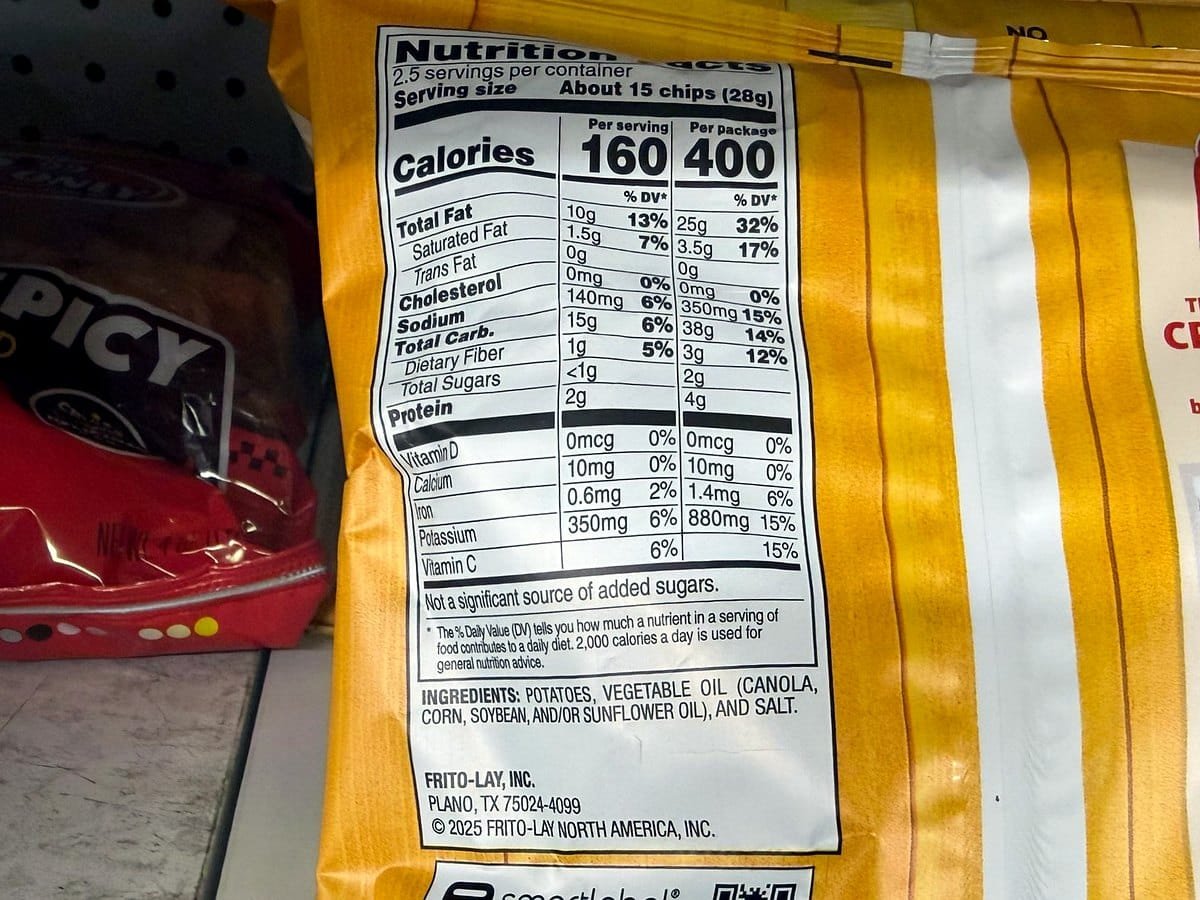
Three things to notice. The list is three ingredients long and the oil is one of them, but the nutrition panel tells you how much: 10 g of fat in a 28 g serving, so about 36% of the chip by weight is oil. The oil line says “and/or” across four oils, which means Frito-Lay uses whichever is available, and the bag in your hand could have any of them. And the panel has a “per package” column, which is the honest one: a 2½ oz bag is 400 calories, and most people eat it as one serving.
Lay’s ingredients explained
Potatoes Real food
Sliced whole potatoes, not a dough. That’s the main difference from Pringles, which are made from dried potato flakes, starches, and flour pressed into a shape. Potatoes bring the 15 g of carbohydrate, 1 g of fiber, and a surprising amount of potassium (350 mg a serving, about as much as a small banana) and vitamin C, though most of the vitamin C is lost to frying.
Vegetable oil (canola, corn, soybean, and/or sunflower) Most of the calories
The frying oil, and the ingredient that turns 28 grams of potato (about 22 calories raw) into 160. These are all seed oils, low in saturated fat and high in unsaturated fat, which is why a serving has only 1.5 g of saturated fat. The section below covers the seed-oil argument and what actually matters about the oil.
Salt Fine, 140 mg
Sprinkled on after frying. 140 mg per ounce is 6% of the daily value, which sounds modest because it is: it’s less than Pringles (150 mg), Doritos (170 mg), Cheetos (200 mg), Goldfish (250 mg), or Takis (420 mg). Salt on the surface tastes saltier than salt mixed into a dough or a seasoning, so plain chips get away with less. The whole bag is 350 mg.
The oil: what matters and what doesn’t
Canola, corn, soybean, and sunflower oil are the “seed oils” that have become the most argued-about ingredient on social media. The claim is that their omega-6 fats drive inflammation. The research doesn’t support that for the amounts people eat: large reviews and the American Heart Association find that replacing saturated fat with these oils is linked to lower heart disease risk, and controlled trials haven’t shown that linoleic acid raises inflammatory markers in people.
What matters about the oil in a chip isn’t which seed it came from; it’s how much of it there is. A serving of Lay’s is 10 g of fat and 160 calories, and the bag is 25 g of fat and 400 calories. That’s the case against eating chips daily, and it applies to any fried chip, whatever oil the bag lists. Baked chips cut the oil substantially, at the cost of a longer ingredient list.
Acrylamide: the ingredient that isn’t on the label
When starchy foods are fried, roasted, or baked at high heat, a reaction between a natural sugar and an amino acid (asparagine) creates acrylamide. It’s not added; it forms in the fryer, which is why it never appears on an ingredient list. The International Agency for Research on Cancer classifies acrylamide as “probably carcinogenic to humans,” based mainly on high-dose animal studies; studies of people eating normal diets haven’t found a clear link to cancer. Potato chips and french fries are among the biggest dietary sources.
Frito-Lay settled a lawsuit brought by California’s attorney general in 2008 and agreed to reduce acrylamide in its chips, and the FDA published guidance in 2016 encouraging manufacturers to lower it through potato selection and frying temperature. The practical advice is the same as for the oil: it’s a reason to keep chips occasional, not a reason to fear a bag. Lighter, golden chips carry less of it than dark, overcooked ones.
The bag’s claims, checked
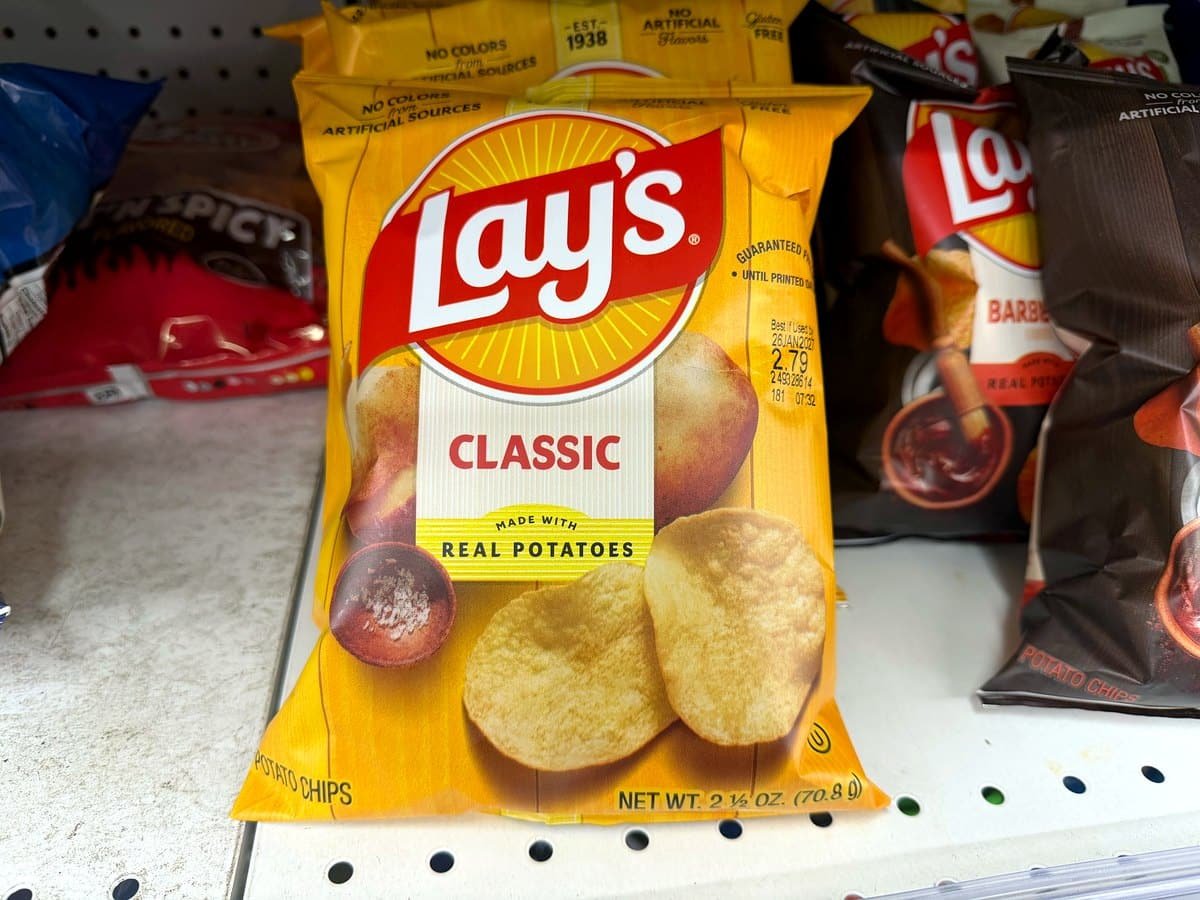
“Made with real potatoes”: true, and more meaningful than it sounds, since many chips are made from potato flakes or other starches. “No colors from artificial sources” and “no artificial flavors”: true, and also true of every plain potato chip ever sold; there’s nothing to color or flavor. PepsiCo said in 2025 that Lay’s would be free of artificial colors by the end of that year, which mattered for the flavored bags, not this one. “Gluten free”: true and labeled, which means it meets the FDA’s under-20-parts-per-million standard. “Guaranteed fresh until printed date”: the bag we read is best by January 26, 2027.
Lay’s vs. other chips
| Per serving (about 1 oz) | Sodium | Base | Synthetic dyes | Flavor additives |
|---|---|---|---|---|
| Lay’s Classic | 140 mg | Sliced potatoes | None | None |
| Pringles Original | 150 mg | Potato flakes and starches | None | Mono- and diglycerides |
| Doritos Nacho Cheese | 170 mg | Corn | 3 | MSG, flavor powder |
| Cheetos | 200 mg | Corn meal | 1 | MSG, cheese powder |
| Goldfish | 250 mg | Wheat flour, cheddar | None | Spices, onion powder |
| Takis Fuego | 420 mg | Corn | Yes | TBHQ, seasoning |
Sodium figures are from each product’s label serving, roughly an ounce; Lay’s is from the bag we photographed. Calories and fat run in a similar range for all fried chips, 140 to 160 calories and 8 to 10 g of fat an ounce; see each breakdown for exact figures.
Are Lay’s chips bad for you?
FittBeat verdict
The cleanest label in the chip aisle, and still a fried snack. Potatoes, oil, and salt is as short as packaged food gets, with no sugar, dyes, flavor powders, or preservatives, and 140 mg of sodium is the least of any chip we’ve covered. The case against Lay’s isn’t the ingredients; it’s the oil and the bag. A third of each chip is frying oil, the 2½ oz bag is 400 calories, and fried potatoes are a leading source of acrylamide. If you’re going to eat chips, plain Lay’s is one of the better bags to choose. Eat them as a snack, not a meal, and treat the bag as two servings.
The concerns, ranked by evidence:
- Calories from oil. 160 per ounce, 400 per bag; the reason chips are linked to weight gain in long-term studies.
- Portion size. The bag is 2½ servings, and the front of the bag shows none of them.
- Acrylamide. Forms during frying; probable carcinogen in animal studies, no clear link in people at dietary levels.
- Sodium. Low for a chip at 140 mg; adds up across a bag and a day.
- Seed oils. Not a meaningful concern on the evidence; the amount of oil matters more than the type.
Lay’s for kids, allergies, and diets
Kids: a single-serve bag of plain Lay’s is a reasonable occasional snack: no dyes, no sugar, modest salt. The 2½ oz bag is a lot for a small child.
Allergies and gluten: the bag is labeled gluten-free, and no major allergens are listed. People with severe allergies should check Frito-Lay’s facility statements, since flavored chips are made in the same plants.
Vegan: yes, potatoes, plant oil, and salt.
Keto: no; 15 g of carbohydrate per ounce.
Cleaner alternatives
For the same chip with less fat: Baked Lay’s, which cut the oil substantially but add starch, sugar, and lecithin to the list. For a shorter list with a different oil: kettle-cooked chips fried in avocado or olive oil, which are no lower in calories. For the crunch without the frying: air-popped popcorn, which has more fiber and far fewer calories per cup. And for the most practical change: buy the single-serve bags, which do the portion control the 2½ oz bag doesn’t.
Frequently asked questions
What are the ingredients in Lay’s Classic chips?
Potatoes, vegetable oil (canola, corn, soybean, and/or sunflower oil), and salt. That’s the whole list; there’s no added sugar, flavoring, color, or preservative.
How much sodium is in Lay’s chips?
140 mg per 1-ounce serving (about 15 chips), 6% of the daily value, and 350 mg in a 2.5 oz bag. That’s less than Pringles, Doritos, Cheetos, Goldfish, or Takis.
Are Lay’s chips healthy?
They have the simplest ingredient list in the chip aisle, but they’re still a fried snack: 160 calories and 10 g of fat per ounce, and 400 calories in a 2.5 oz bag. Fine occasionally; not a daily food.
Are Lay’s gluten-free?
Lay’s Classic is labeled gluten-free. Flavored varieties differ, so check the bag.
What oil are Lay’s fried in?
Canola, corn, soybean, and/or sunflower oil, depending on availability. The label lists all four because the blend can change from bag to bag.
Do Lay’s chips contain acrylamide?
Yes. Acrylamide forms naturally when potatoes are fried at high heat, so it’s present in all fried potato chips. It’s classified as a probable carcinogen based on animal studies; studies in people at normal dietary levels haven’t found a clear link. Frito-Lay agreed to reduce acrylamide levels in a 2008 California settlement.
Are Lay’s chips vegan?
Lay’s Classic is vegan: potatoes, plant oil, and salt. Some flavored varieties contain milk.
How many servings are in a bag of Lay’s?
The 2.5 oz bag is 2.5 servings. The full bag has 400 calories, 25 g of fat, and 350 mg of sodium.
Sources
- Frito-Lay North America (PepsiCo). Nutrition facts and ingredients, Lay’s Classic Potato Chips, 2.5 oz bag, ©2025. Product label, photographed November 2026.
- International Agency for Research on Cancer. Acrylamide. IARC Monographs on the Evaluation of Carcinogenic Risks to Humans, Volume 60, 1994. publications.iarc.fr
- U.S. FDA. Guidance for industry: acrylamide in foods. 2016. fda.gov
- Sacks FM, et al. Dietary fats and cardiovascular disease: a presidential advisory from the American Heart Association. Circulation, 2017. doi:10.1161/CIR.0000000000000510
- Johnson GH, Fritsche K. Effect of dietary linoleic acid on markers of inflammation in healthy persons: a systematic review of randomized controlled trials. Journal of the Academy of Nutrition and Dietetics, 2012. doi:10.1016/j.jand.2012.03.029
- Mozaffarian D, et al. Changes in diet and lifestyle and long-term weight gain in women and men. New England Journal of Medicine, 2011. doi:10.1056/NEJMoa1014296
- U.S. FDA. Gluten-free labeling of foods. fda.gov
Frito-Lay’s 2008 acrylamide settlement with the California Attorney General, and PepsiCo’s April 2025 statement that Lay’s would be free of artificial colors by the end of 2025, as reported in company statements and general press.
This article is for informational purposes and is not medical advice. Talk to a doctor or registered dietitian about your individual nutrition needs.
